Loading... Please wait...
- 07 38233033
- Home
- My Account
- Gift Certificates
- View Cart
- Home
- Model Kits
- Aircraft
- TAMIYA 1/48 GRUMMAN F-14A TOMCAT (LATE MODEL)



, $149.95 (https://budgethobbies.com.au/tamiya-1-48-grumman-f-14a-tomcat-late-model/))
TAMIYA 1/48 GRUMMAN F-14A TOMCAT (LATE MODEL)

Product Description
Ready for Take-Off
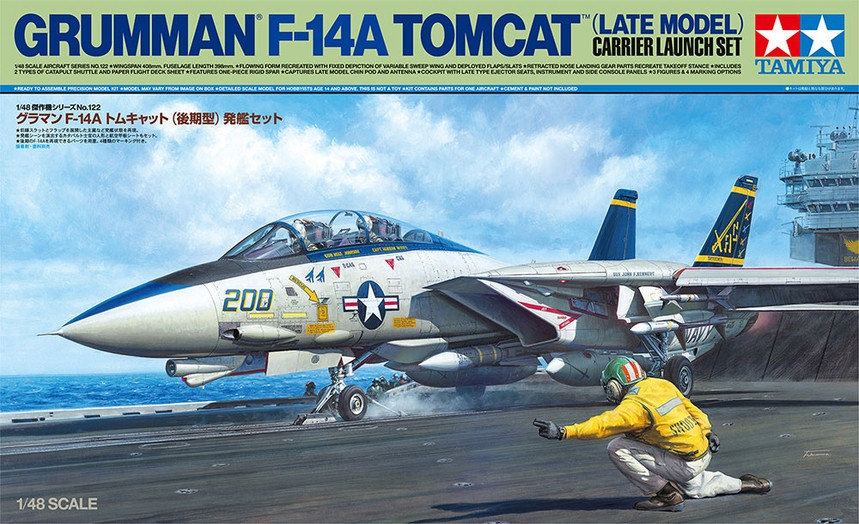
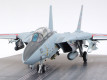
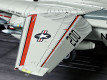
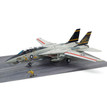
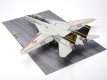
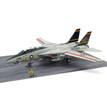
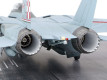
This model kit recreates the Grumman F-14A Tomcat. The F-14A Tomcat U.S. Navy Fighter is famous for being the first mass-production and the most-produced model among the F-14 series. This kit realistically depicts the F-14A Tomcat (Late Model) - in service from the late 1980s to the early 2000s- with wings featuring separate flaps and slats. The kit includes one crew figure and paper flight deck sheet for use on a super realistic diorama set.
• 1/48 scale plastic model assembly kit of the Grumman F-14A Tomcat (Late model). Fuselage length: 398mm, Wingspan: 408mm.
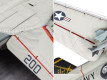
• Features fixed depiction of variable sweep wing supported by a single-piece part.
• The kit depicts wings with deployed flaps and slats which can be attached to wing by support parts (NOTE: This model CANNOT depict wing at neutral position).
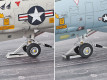
• The catapult shuttle and one-piece holdback bar with its nose landing gear realistically depict the F-14A taking off from the carrier deck.
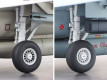
• New nose landing gear part with retracted "kneeling'' shock absorber recreates the F-14A's takeoff stance.
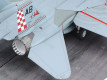
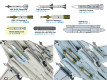
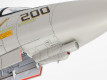
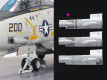
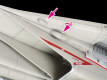
• Features detailed sections such as telephoto camera pod, AAX-1 TCS, ALR-45 radar warning antenna under wing, and four Mk. 82 low-drag general-purpose bombs (LDGP, 500 pound) for realistic look.
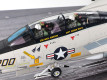
• A realistically recreated cockpit depicts late model ejector seat cushions, instrument panel and side console panels.
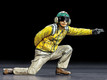
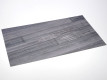
• Includes the catapult officer (called “Shooter” who gives the OK for the operator to release the shuttle) figure and paper flight deck sheet.
• Comes with four marking options: two for F-14As from the VF-32 “Swordsmen” and one VF-211 “Fighting Checkmates”, plus one VF-154 “Black Knights”.
The F-14 Tomcat is a legend of the skies, which served between 1973 and 2006 and - with powerful radar and long-range missiles - was developed for carrier-based units. Its most prolifically produced variant was the F-14A, which itself was given a number of upgrades throughout its production; late F-14As (those produced from the late 1980s) featured a more reliable engine design, and notably, the AN/AXX-1 TCS camera pod, plus the AN/ALQ-126 ECM antenna ahead of the wing gloves. Some even had alterations to the fuselage allowing installation of the TARPS reconnaissance pod. From the early 1990s, the aircraft was capable of mounting bombs on its belly; in conjunction with the AN/AAQ-25 LANTIRN pod, these were laser-guided - the F-14A had evolved into a multi-role fighter. Carrier launches required a steam catapult, to which the aircraft would be harnessed with its nose lowered, variable sweep wing forward, and flaps and slats down. Numerous flight deck crew would be engaged in the launch, including a "Shooter," who gave the signal for take-off.
Specifications:
- This is a 1/48 scale plastic model assembly kit.
- Fuselage length: 398mm, wingspan: 408mm.
- Features dedicated parts to depict a late model F-14A rady for carrier launch, plus a paper flight deck sheet.
- Choose between two types of catapult spreader (shuttle).
- Durable wing spar components ensure secure fit.
- Late model features such as chin pod with camera, antenna and so on are depicted.
- Plenty of accessories are included: standard and laser-guided bombs, reconnaissance camera pod, and air-to-air missiles.
- Parts accurately depict late model ejector seats and instrumentation.
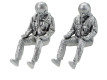
- Comes with 2 crew figures featuring late model standard flight uniform.